

Estrangement: Navigating The Valley of Darkness
Ten places we recognize as we walk through estrangement, grief, and the transformation that follows.

To those walking through the valley,
There was a time when I believed estrangement was the hardest thing I would ever walk through. The silence, the grief, and the unanswered questions.
Eventually, estrangement can leave us with nowhere else to look. The usual ways we make ourselves feel better, regain control, explain the situation, or change the outcome stop working. And in that space, we finally encounter ourselves.
In most areas of our lives, we have escape routes when we find ourselves in the darkness. We negotiate. We explain. We distract ourselves. We stay busy. We search for answers, believing that if we just understand enough, everything will finally make sense and the light will return.
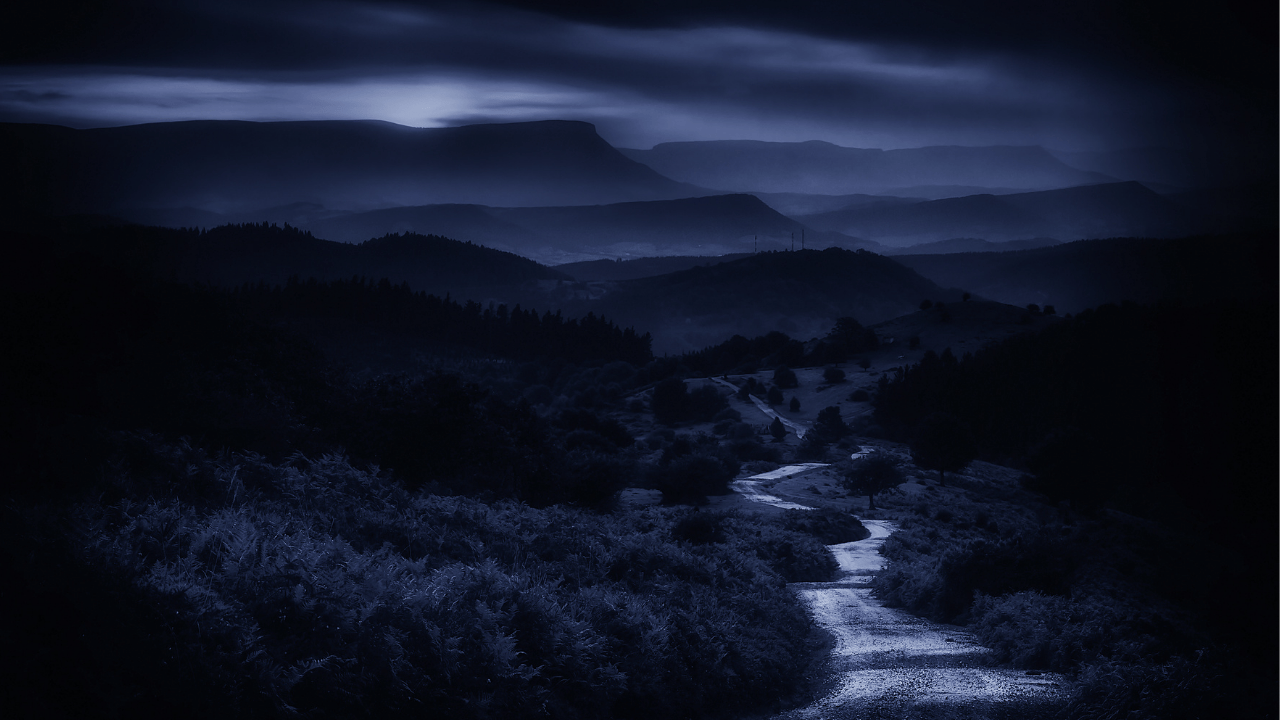
But estrangement leaves little room to hide. It doesn’t negotiate. And eventually, when all our explanations have failed and all our strategies are exhausted, we’re left face to face with the one relationship we’ve spent the least amount of time understanding… the relationship we have with ourselves.
And yet there’s an invitation in that exposure. An ancient one.
Thousands of years ago, the Psalms gave voice to the valley. In Hebrew, the phrase traditionally translated as "the valley of the shadow of death" is also understood by many scholars as "the valley of deep darkness." It is a place of fear, uncertainty, and suffering, not only at the end of life, but in the many valleys we walk through while living… where everything we've leaned on begins to give way.
Yet it offers something unexpected. It doesn’t promise a way around the valley. It simply reminds us we are not walking through it alone.
Perhaps that is why these ancient words still speak to us today. Every life has its valleys. Seasons when the ways we've learned to survive no longer carry us, and we are encouraged to just keep moving forward anyway.
I want to explore some of the landmarks I’ve come to recognize. Places we often encounter as we move through estrangement, grief, and the quiet transformation that unfolds as we keep walking.
1. The Valley Isn’t the Problem
Most of us spend our energy trying to escape the darkness. We look for the right words, the right professional, the right book, the right letter that will finally carry us back into the light. But Psalm 23 never promises a shortcut. It doesn’t say we avoid the valley. It says we walk through it. That’s a very different invitation. Perhaps the valley isn’t evidence that life has gone wrong. Something changes when we stop resisting what is. We begin relating to the valley from a different level of consciousness, and from there everything else begins to look different. For me, the question was no longer, “How do I get out of this?” It became, “What is this asking of me” The destination matters, but the consciousness with which we travel matters more.
2. When God Stops Being an Idea
It’s easy to speak about God when life still makes sense. We can discuss faith, quote scripture, and debate spiritual ideas from a comfortable distance. Then something happens that dismantles the life we thought we knew, and suddenly the conversation changes. In Psalm 23, the writer stops talking about God and begins talking to God at the exact moment he enters the darkest valley. The distance disappears where we expect it to grow. Perhaps this is what suffering does at its deepest level. It doesn’t create God. It removes the illusion that we were ever separate.
3. The Shadow Is Not the Thing
A shadow feels convincing until we remember what a shadow actually is. It has no substance of its own. It exists because light is present. We often spend years fighting the shadow, convinced it is the reality itself, when all along it has been pointing us toward something greater. Estrangement can become that kind of shadow. We begin believing it defines us, that it tells us who we are, that it has the final word over our lives. But perhaps the shadow is not the truth. Perhaps it is simply the place where the light has become difficult to recognize. Maybe we've been staring at the shadow so long we've forgotten to seek where the light is coming from.
4. The Story Is Not the Self
There comes a moment when we realize we have been introducing ourselves through our pain. We become the estranged mother. The rejected father. The abandoned son or daughter. The grieving one. The lonely one. These identities feel solid because we have lived inside them for so long. But they are still stories. Real stories, painful stories, but stories nonetheless. Beneath every story is something untouched by what happened. The deepest healing isn’t learning how to tell the story better. It’s remembering who you were before the story became your identity.
5. Nothing More to Do
One of the hardest truths to accept is that there may come a point where there is nothing left to do. Not because you’ve given up, but because every action has quietly become another attempt to control what no longer belongs to you. We assume healing always requires more effort, more insight, more strategy. Sometimes healing begins when effort ends. There may be nothing more to accomplish, only something to stop. Stop rehearsing the conversations. Stop negotiating with the past. Stop trying to become worthy of love you already possess.
6. The Spiral
Many people believe healing should look like a straight line. Every day should be a little easier than the one before. So when grief returns six months later, or two years later, they assume they’ve failed. But consciousness doesn’t move in straight lines. It moves like a spiral. We revisit familiar places, not because we’ve gone backward, but because we’ve become someone new since the last time we stood there. The grief may look familiar, but the one experiencing it is no longer the same person. What feels like repetition may actually point to revelation.
7. When Fear Means You’re Moving
There is a strange moment in every genuine transformation when everything inside us wants to turn back. The old identity is dissolving, but the new one hasn’t fully emerged. It feels like darkness, uncertainty, even panic. We often assume this means we’ve taken a wrong turn. The mystics say otherwise. They remind us that the dark isn’t the absence of the journey. It is the journey. The fear isn’t always asking you to retreat. Sometimes it’s announcing that the walls you’ve mistaken for yourself are beginning to come down.
8. Validation or Connection
Many of us believe we are reaching for connection when, if we’re honest, we’re still reaching for validation. We want someone to reassure us that we were right, that we were good enough, that we didn’t deserve what happened. There is nothing shameful about that longing. But validation and connection are not the same thing. Validation asks another person to stabilize our identity. Connection arises when our identity no longer depends on their agreement. Until then, every relationship quietly carries the burden of proving our worth.
9. The End Before the End
Have you ever noticed that the mind often obsesses over an ending long before life has actually arrived there? It replays conversations, imagines every possible outcome, rehearses acceptance while secretly hoping to avoid it. Perhaps this isn’t evidence that you’re stuck. Perhaps it’s evidence that something inside you already knows a chapter is closing. The mind is trying to arrive before the heart is ready. Real endings rarely happen all at once. They unfold slowly, asking us to release what has already begun to leave.
10. The Way Through
The greatest misunderstanding about healing is that it is supposed to return us to who we were before everything fell apart. But life has never worked that way. The valley changes us. The loss changes us. Love changes us. We resist change, yet change is the one thing life has always asked of us.
There is no way around what must be lived. There is only the way through. And maybe the way through has never been about reaching the other side.
Perhaps that is the deepest truth woven through Psalm 23. Not that we avoid it, but that we are never asked to walk it alone.
With love and encouragement,


We are not transformed because we escape the valley of darkness. We are transformed because we keep walking.
Over the past several years, I’ve been walking with a small group of women through these very landmarks. Not by teaching them how to escape the valley, but by helping them recognize where they are as they move through it.
At the end of August, I’m opening The First Threshold again to a small gathering of women walking through the valley together.
Not ready for that step yet? Stay close. The invitation will wait.
This is wonderful Lisa! I had never really noticed this dark valley verse changes from 3rd person to first -- to direct connection: from he to you. This whole experience has been frustrating, infuriating, demoralizing, but I have learned as you remind us each time, our identity is not dependent on our children or grandchildren, but on who we really are: a child of God and He is always with us and in us. Thank you for this powerful truth!
Hi Lisa, your words pierced my heart, again. Looking in the mirror and “really” seeing myself is humbling. Every 10 places you walked me through were vividly felt. And my thoughts at this moment are: I am human, a woman, Mom, wife, daughter, friend that did the best I could very passionately with a combination of love and fear. Did I do everything right, no; was I intentionally over protective, absolutely; was I intentionally hurtful, no and sometimes yes; do I forgive others, yes; really? I think yes. Then why can’t I forgive and love others as I do myself? If I have always believed in God and Jesus, dying for our sins past, present and future, then why was I so bitter, angry and hurt? It’s called life, growing and accepting I was and never will be in control, only God knows what the final outcome will be. But until my last day on earth, I can choose how I feel and my daily actions. As I write these words, my thoughts sound so simple; yet I know it is not, love creates deep feelings that can distort common sense. Thank you for compassionately walking me through a healing journey and your 10 thoughts of Psalms 23 to look at estrangement and “Navigating The Valley of Darkness” in a different light. Each day is a fresh start; an opportunity to embrace a better tomorrow, no matter the circumstances. And the promise that we are NEVER alone.
With love and peace for all,
Michele