

When Estrangement Stories Collide
And the one question that changes everything.

Hello Very Loveable One,
One of the most interesting things about writing publicly about family estrangement is watching what happens in the comments.
A single article can draw out completely different experiences of the same pain. People reading the same words often see entirely different stories reflected back to them.
Recently I shared a reflection called Crucified by Family, Resurrected in Divine Love, exploring how ancient spiritual stories sometimes mirror the painful dynamics we experience inside our own families. The piece wasn’t about comparing ourselves to Jesus or asking anyone to live up to an impossible spiritual standard. It was about noticing a deeper archetype: the human tendency to become trapped inside the identity of the wounded one.
Two Voices, One Pain
But something fascinating happened in the comments.
Two very different voices appeared, and together they revealed a pattern that is becoming more common in the wider conversation about estrangement.
One voice spoke from the perspective of justice. The belief underneath it was clear: estrangement continues because harm was never acknowledged. Truth must be spoken, wrongdoing named, accountability demanded before healing can begin.
Another voice spoke from a place of exhaustion. The belief there was equally clear: estrangement continues because the expectations placed on parents become impossible to meet. No matter what is said or done, it will never be enough.
Both voices carried pain. Both carried conviction. Both believed they were pointing toward truth.
And yet something deeper was happening beneath the surface.
The Tragic Symmetry
What emerged was the tragic symmetry that so often keeps estrangement alive.
One side is searching for justice.
The other is searching for relief.
One feels unheard.
The other feels condemned.
Both stories contain truth. But when they collide directly, the conversation quickly becomes a struggle over guilt and blame.
Who was wrong. Who must admit it. Who carries the moral burden of what happened.
Once the conversation moves into that territory, something subtle occurs. The story of the past becomes the organizing center of the present. The mind circles endlessly around the question of who is guilty.
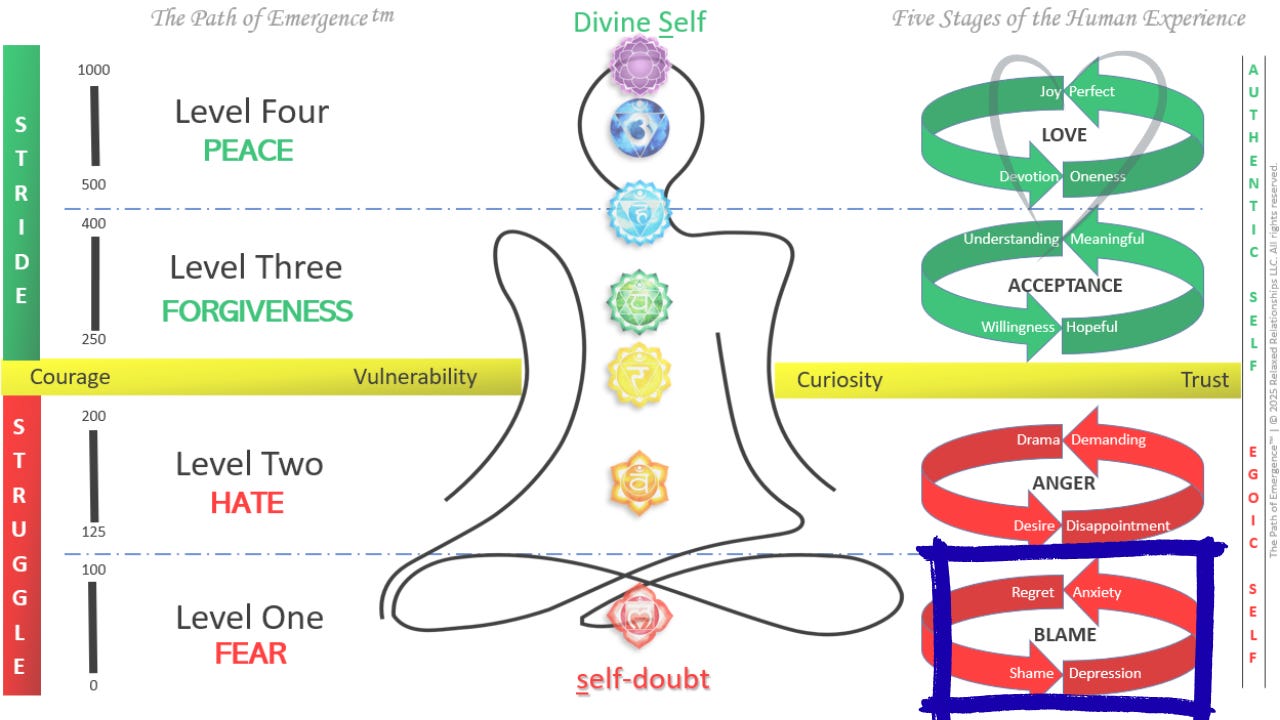
This is the trap of blame. And it belongs to no single side. Both perspectives arise from real pain, and both deserve compassion.
A Different Question
What interested me most about that comment exchange was something else entirely. The article itself was pointing to a different question altogether, one that sits outside the moral battlefield.
Not who is guilty, but what consciousness we are bringing into this experience now.
This shift is not easy. It’s not a requirement. It is not a prescription for forgiveness, reconciliation, or staying in any relationship that harmed you.
On the spiritual path, it is an invitation, to see your situation from a higher place than the one the past created.
This requires a leap of faith and a little willingness to step, even briefly, beyond the story. Not because the story is wrong, but because you are larger than it.
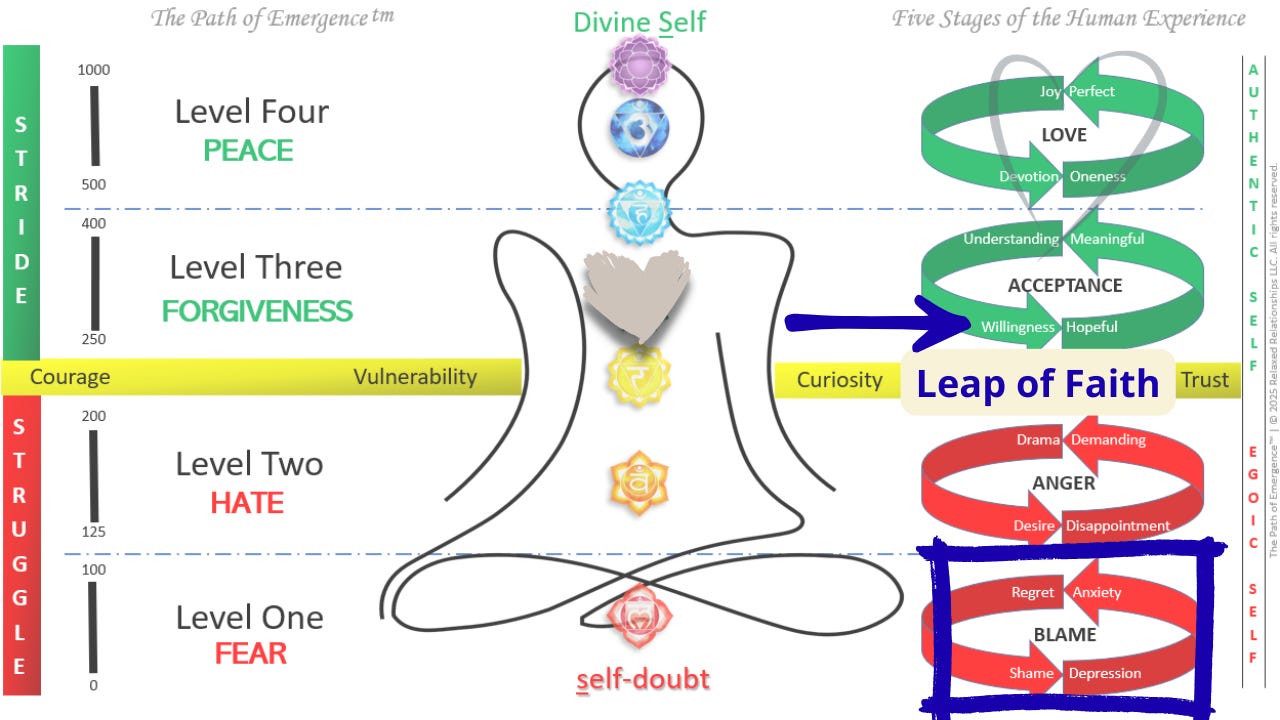
That is why estrangement conversations online often feel so polarized right now. Adult children and parents are beginning to speak publicly at the same time, and their narratives are colliding.
One says: I was harmed and it was never acknowledged.
The other says: I am being judged by impossible standards.
Both perspectives arise from genuine pain. Yet when they meet head-on, the result is often accusation on one side and defense on the other.
The deeper invitation appears only later, when someone becomes willing to step outside that loop and ask a different kind of question.
Not what happened decades ago.
But what identity we may have built around that moment.
The Mirror Underneath
This is where estrangement begins to reveal itself as something more than a family conflict.
It becomes a mirror.
For the stories we carry about ourselves and about others. Stories that can quietly shape the entire field of a relationship long after the original wound occurred.
There is a natural order to how we move through pain like this.
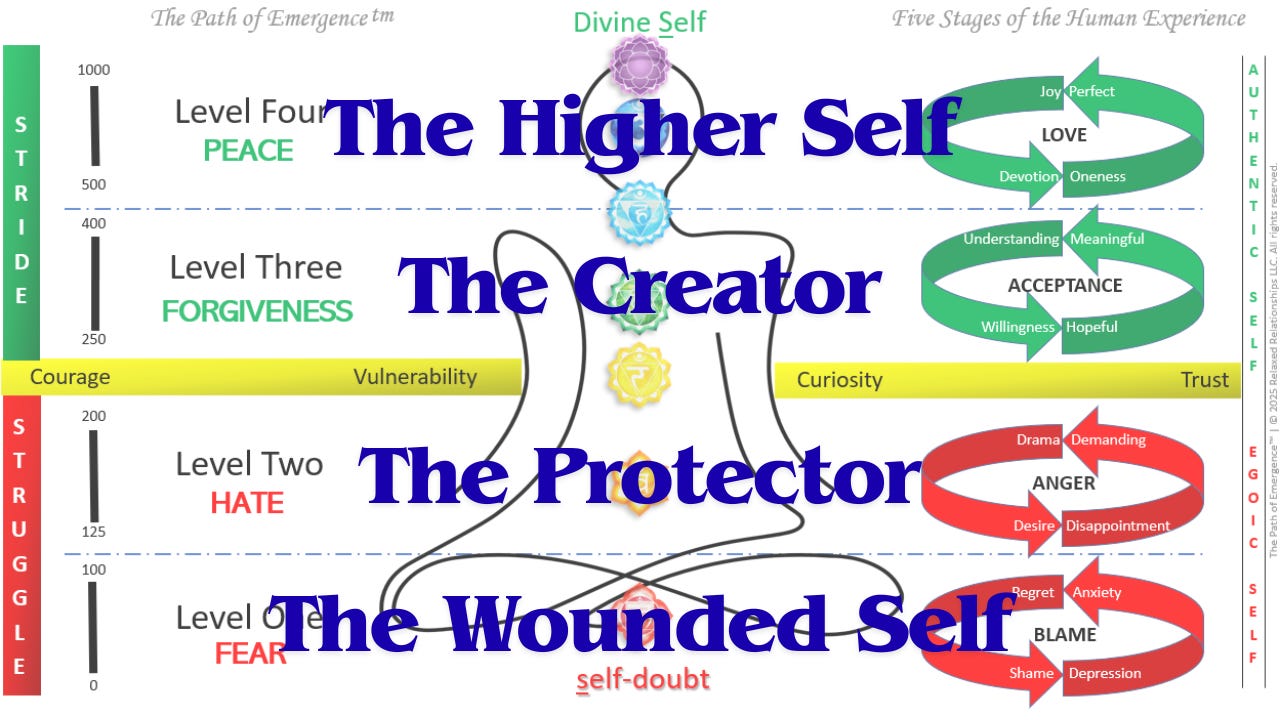
First, we feel it. We name it. We protect ourselves from further harm. This is necessary and right. The wounded self deserves to be heard, believed, and safe. No genuine healing skips this ground.
And then, for some, but not all, and never on a timetable… something else becomes possible.
A quiet question begins to surface.
Not what happened to me, but who have I become in relation to what happened?
This is not about minimizing the past. The harm was real. And it occurred in a moment, a series of moments, that now live primarily in memory and in the stories pain wraps around them.
What becomes worth examining, when someone is genuinely ready, is whether the identity built around those moments is still the truest thing about who we are now.
This is not a therapeutic prescription. It is a different kind of question entirely, and one that arises naturally at a certain point on the path, and cannot be forced before its time.
Most of the public conversation about estrangement still lives inside the conflict. People are trying to determine which narrative is correct.
But occasionally something else becomes visible.
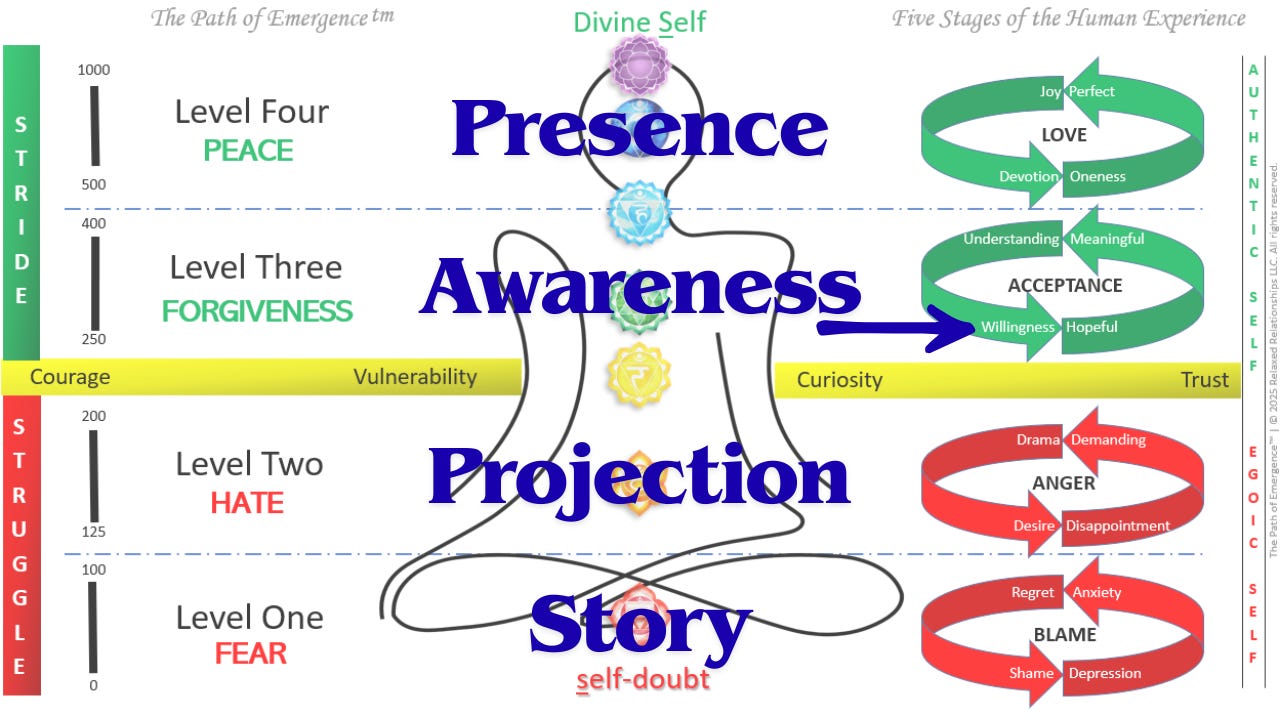
A small shift in awareness. A willingness to step back from the battlefield of blame and notice the pattern underneath it.
A New Way Forward
This is the place where a different kind of work begins.
Not the work of proving the story.
But the work of understanding the consciousness we bring to it.
And sometimes, when that shift happens, the entire field of the relationship begins to change.
Not because the past is rewritten.
But because we are no longer standing inside the same consciousness that created the conflict.
The shift can only happen within us. We are always the cause. The outer world is always the effect.
Not as the peace of closing a door, but as something quieter and stranger than that. A release of the other person as the organizing center of our inner world.
When that happens, we are no longer free from them.
We become free for something larger.
In my own experience, reunion became possible only when I stopped making it the goal. It was not something I created. It was something that arrived when I aligned with what is real… with Divine Love itself. When we genuinely align there, love has a way of reorganizing everything around us.
This is the deeper work estrangement eventually asks of us.
Not to determine who was right.
Not even to forgive.
But to walk far enough into truth that God, or whatever name you give that higher intelligence, can take the final step.
Walking this with you,


The moment we stop asking who was right, we begin discovering who we are.
~ Inspired by The Path of Emergence.
If something in this piece stirred a quiet recognition — not agreement, not readiness, just a flicker of curiosity — that is enough to begin.
I created a free six-week recalibration for exactly this moment. Each week arrives gently, meeting you where you are, and inviting you, one step at a time, into a higher view of what you are living.. You can find it here.

Such good conversations we can have, Lisa. I’m truly thankful for your vulnerability and openness, especially on something so sensitive, without it turning hostile.
I am so sorry that you feel condemned. I want to be very clear my heart has NEVER been about condemnation. Scripture tells us
“There is now NO condemnation for those who are IN Christ Jesus.” — Romans 8:1
So it does lead to a deeper and maybe bold question… if we feel condemned instead of convicted when someone we love shares how we’ve hurt them, is there something deeper going on in our hearts? Have we accepted we are a sinner in need of a Savior, and that Savior is Jesus Christ? Have we invited Him into our hearts because we know without Him. We ARE all condemned! We cannot save ourselves!
Because condemnation is not from Christ. It’s from the enemy. When we are in Him, we are actually freed to hear where we’ve caused harm so we can repent without shame or condemnation. Jesus transforms condemnation into conviction and conviction into TRUE repentance, healing, and restoration.
So then the question becomes…why do our feelings of condemnation outweigh the harm our actions caused someone else?
Scripture calls us to humility, especially as parents—
“Do nothing out of selfish ambition… rather, in humility value others above yourselves.” Philippians 2:3
Telling someone the truth about harmful behavior may not be condemnation with the right heart posture (if it’s with the wrong heart posture from someone not in Christ then it can absolutely be weaponized to wound instead of heal, but even then. If we are secure in Christ then we can care more about the truth than the delivery). In Jesus it’s about honesty about our sinfulness, and ultimately an invitation toward freedom in Christ to confess our sins and be healed.
As a parent of three young children myself, it is my responsibility to model the humility I hope to see. I know I am an imperfect parent—just like my parents were. But can I sincerely apologize when I miss the mark? Can I put their feelings above my own? Not in a way that the world revolves around them; but in a way that shows they matter. Their heart matters more than protecting my ego.
On my own, I couldn’t. I would be lost in pride or shame. But with Christ, anything is possible.
I am so thankful to Jesus that my children can feel safe in coming to me and tell me when I’ve hurt them, and I can apologize for hurting their hearts—even if they still need discipline and consequences to guide them. Those two things can exist together.
And to be clear. it’s not because I’m good. It’s because Jesus is.
I know for me, because I love Jesus first and I’ve asked Him to change me, I can repent when I hurt my children.
Even when I’m tired or stressed, I can lay down my pride, not blame them for my reactions, and take ownership.
Sometimes that means recognizing my responses came from my own unhealed wounds as a child. Not to blame my parents, to see how the enemy wounded my fragile childlike heart with false accusations. Because we live in a fallen world.
And I’ve also come to realize that if someone has truly given their life to Christ but still feels deep condemnation, it may not be about the correction itself but about unhealed places from the past where they were condemned or shamed.
That’s something only Jesus can gently heal when we allow Him to. It’s about relinquishing control. Surrender. Just because I’m a parent doesn’t mean I’m superior over my children’s humanity. Respect should be mutual.
My intent has never been to punish or condemn my parents. My spouse. My children. But when I do, out of exhaustion, I apologize..
But when someone continues to choose self-protection over humility, especially when their actions are still causing harm, I have to be honest about that.
This isn’t about bringing up the past—it’s about ongoing patterns in the present that are met with defensiveness and hostility instead of handled with care and compassion.
I can’t control how my honesty is received. I can speak truth in love, remind them I love them, and leave the rest to God. But I am still responsible to guard my heart and protect my children when harmful patterns continue.
“Speaking the truth in love…” — Ephesians 4:15
“Above all else, guard your heart…” — Proverbs 4:23
Jesus Himself warned that following Him would not always bring earthly peace, but division…
“Do not think that I came to bring peace on the earth; I did not come to bring peace, but a sword.” Matthew 10:34
“From now on there will be five in one household divided… three against two and two against three.” Luke 12:52
“They will be divided, father against son and son against father, mother against daughter and daughter against mother…” Luke 12:5
This isn’t because Jesus desires conflict but because truth and sin cannot coexist without tension. When one person chooses truth and another resists it, there will be spiritual division.
“Everyone who does evil hates the light… but whoever lives by the truth comes into the light.” John 3:20–21
That division is painful, especially in families. But it doesn’t mean we’ve done something wrong by walking in the light. Sometimes it is the very evidence that we are.
And even in that, we are not without hope.
“Blessed are the peacemakers…” — Matthew 5:9
We are still called to love, to pursue peace where it is possible, and to keep our hearts soft before God. But peace cannot come at the cost of truth, or its fake peace, which the Bible also warns is destructive.
So we hold both—we stand firm in truth, and we remain anchored in love.
And we trust that the same God who transformed our hearts is still able to reach our loved ones who are lost and feeling condemned.
The Bible says children are a gift. A blessing from the Lord. Is it possible children were sent to people who were lost, so our children can show us Heaven by offering the grace and forgiveness Jesus has for us when we repent and the our hearts back to God? And how can we receive grace and forgiveness if we refuse to see what we need forgiveness for?
I pray this is received with the heart posture in which it was written. All glory to God!
💜